Designing for the final frontier.
DEATH x TECHNOLOGY DIGITAL x PHYSICAL GAME DESIGN
A Conversational Game for End of Life
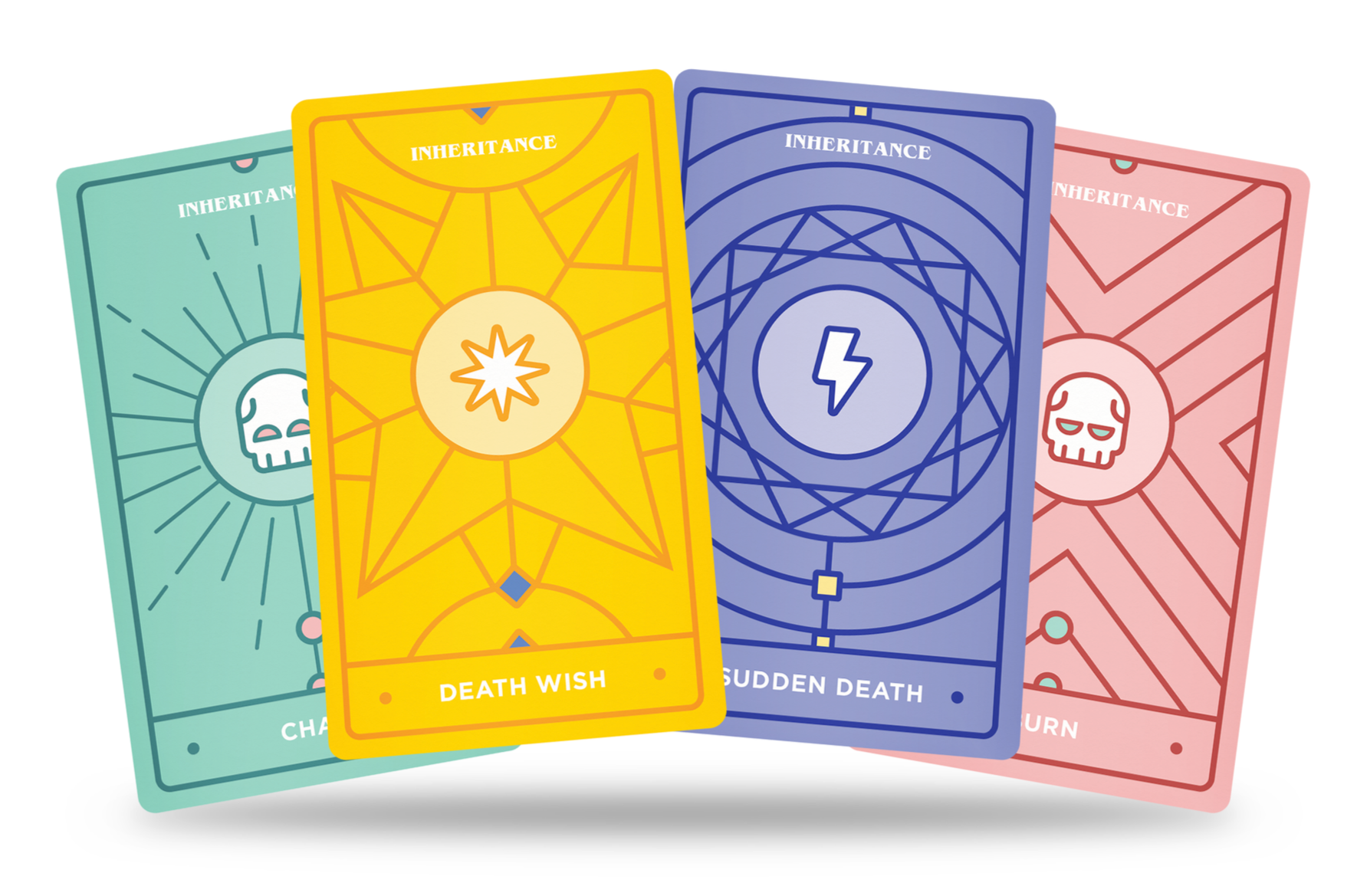
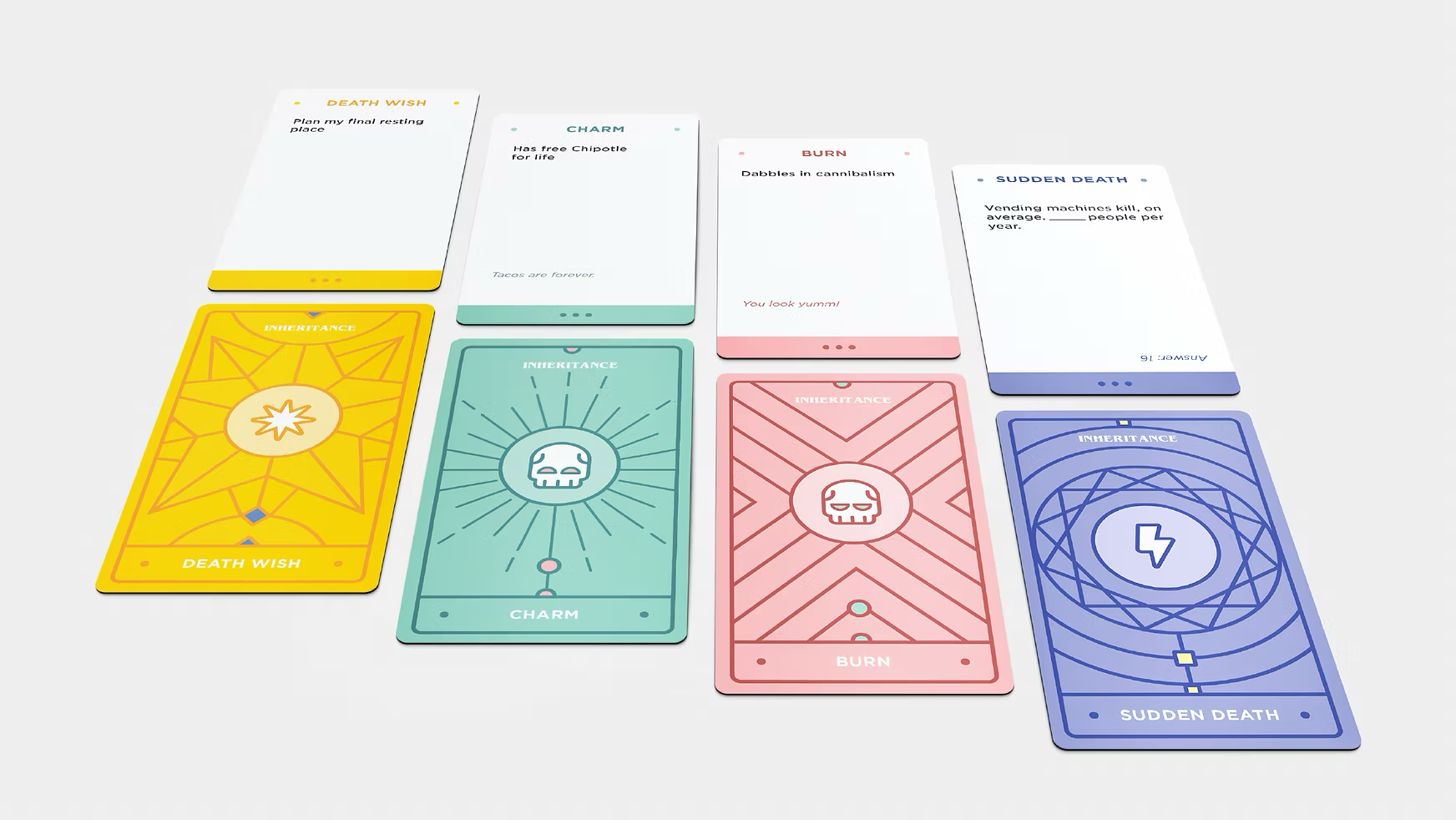
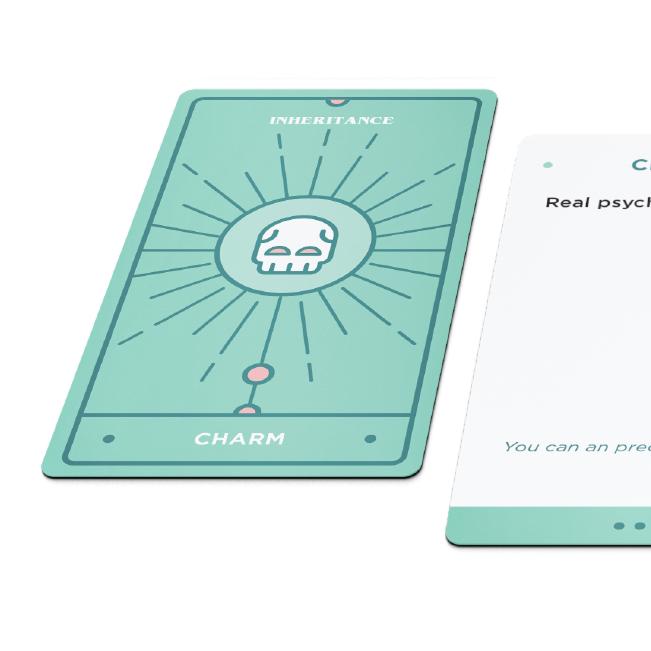
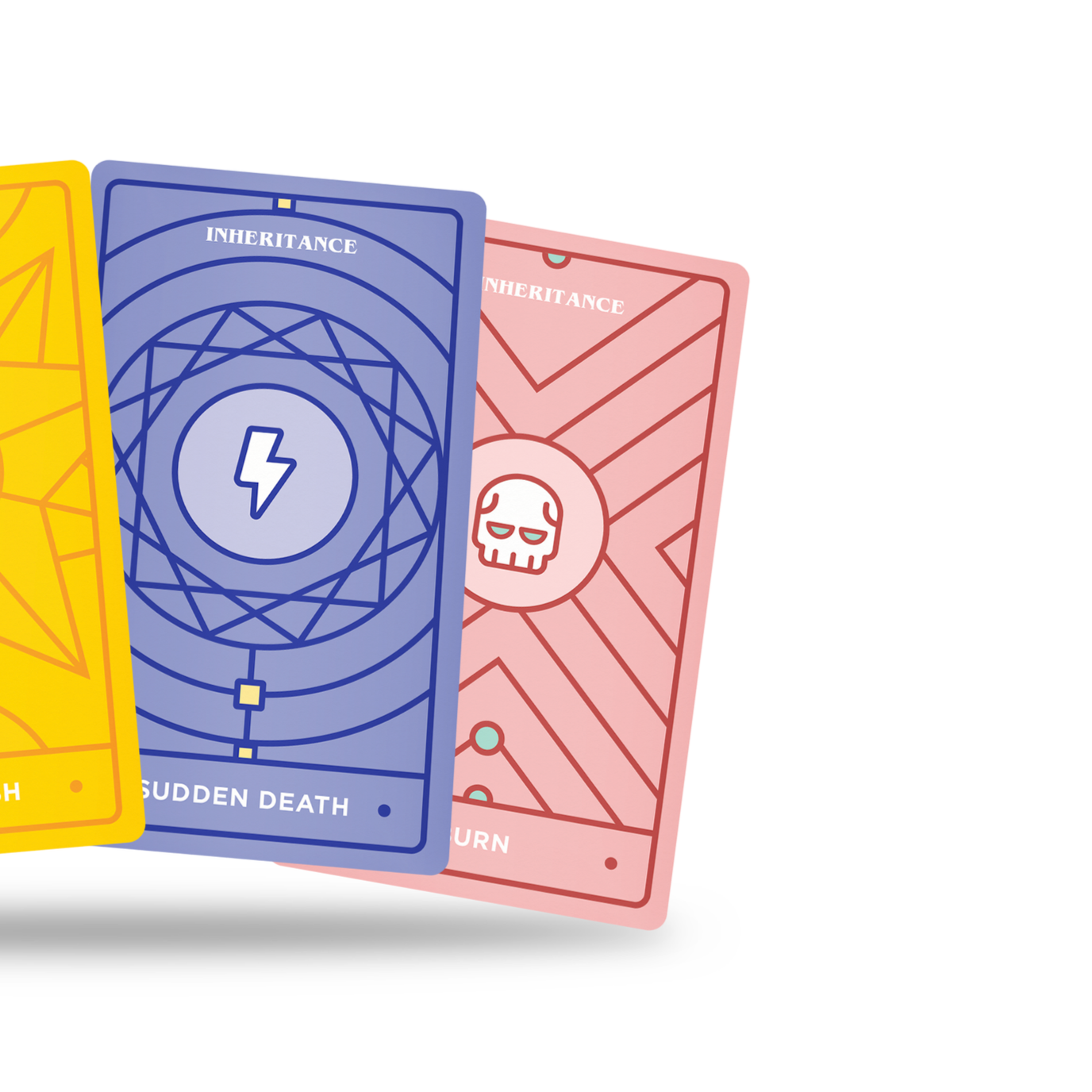
Death x Tech is a conversational card game that helps people talk about death, end of life wishes, and legacy while they’re still very much alive. It grew out of mixed methods research into how Americans avoid planning, rarely back up or curate their data, and almost never clearly communicate what they want to happen to their bodies, their belongings, or their digital lives.
CATEGORY
– Death Industry
– Interactive Entertainment
MY ROLE
– Digital Identity & Data Ethics
– Product Design & Development
– Gaming Mechanism Strategy
– Card Game Content
– Thematic Analysis
– Research Methods
BRIDGING DIFFICULT CONVERSATIONS
Make the Unspeakable Speakable.
Death in the U.S. is both highly meaningful and highly avoided, which leaves most people unprepared and their families without clear guidance about wishes, legacy, or digital identity. At the same time, people are creating vast digital lives on platforms whose policies treat accounts as property, not identity, forcing loved ones through confusing, fragmented processes in moments of grief. Existing tools often bury users in legalistic planning workflows that sidestep real mortality, leaving a gap for something approachable yet genuinely about end of life. That gap is widening against a changing death landscape, with more cremation, green options, DIY rituals, and digital memorials, set against kitchen tables where no one knows how to start the conversation.
CURIOUS CARDS, SERIOUS QUESTIONS
Nervous Laughter Turned into Real Conversation.
Death is inevitable and affects every individual and the relationships they are a part of, yet American culture often treats conversations about death as morbid and taboo.
Death X Tech explores this balance using play to open up conversations while still honoring the complexity and emotional weight of the topic.
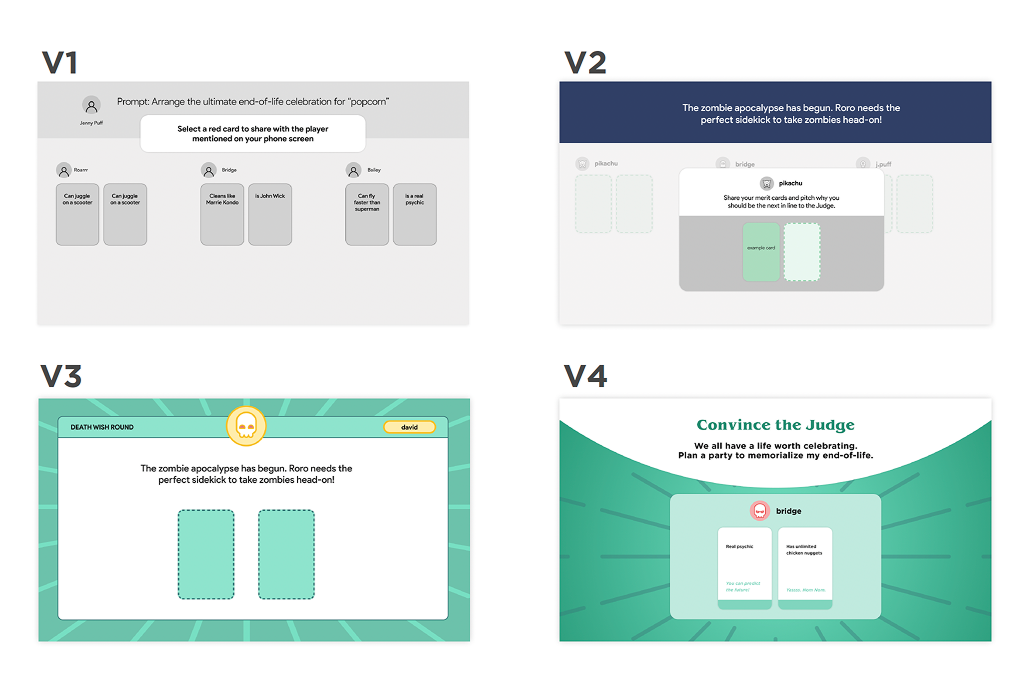
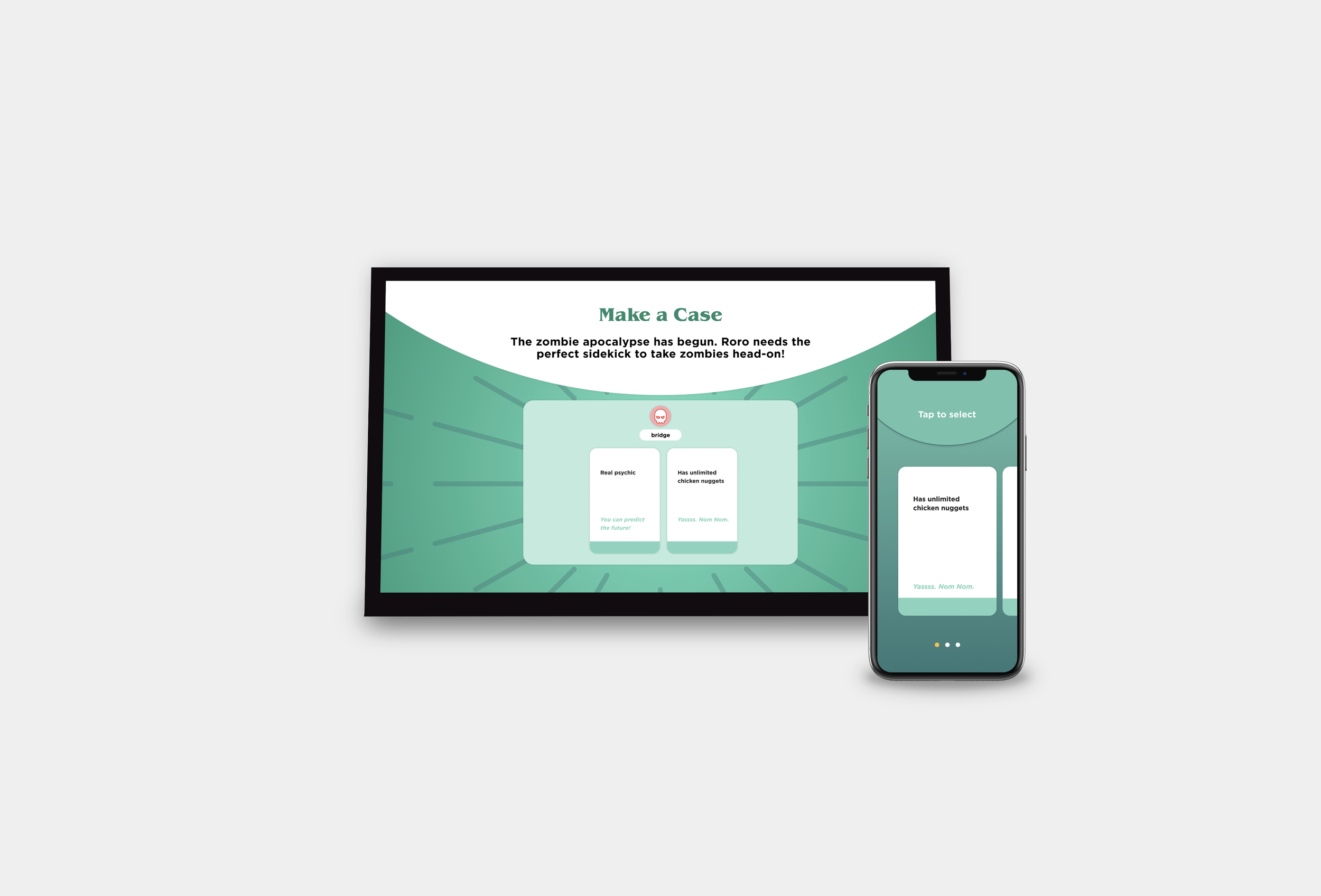
The research surfaced a set of consistent gaps: people care deeply about how they die and how they’re remembered, but very few complete advance directives, organize their digital lives, or communicate their wishes to close connections. I translated these gaps into a game format that lowers the barrier to entry by using hypothetical scenarios, playful structure, and values‑driven prompts to make conversations feel safer, more honest, and less clinical. Death x Tech reframes silence as a design problem and offers a small, tangible intervention that turns “we should really talk about this someday” into an actual, shared conversation in everyday spaces like the living room or kitchen table.
Validating with Death in the Room
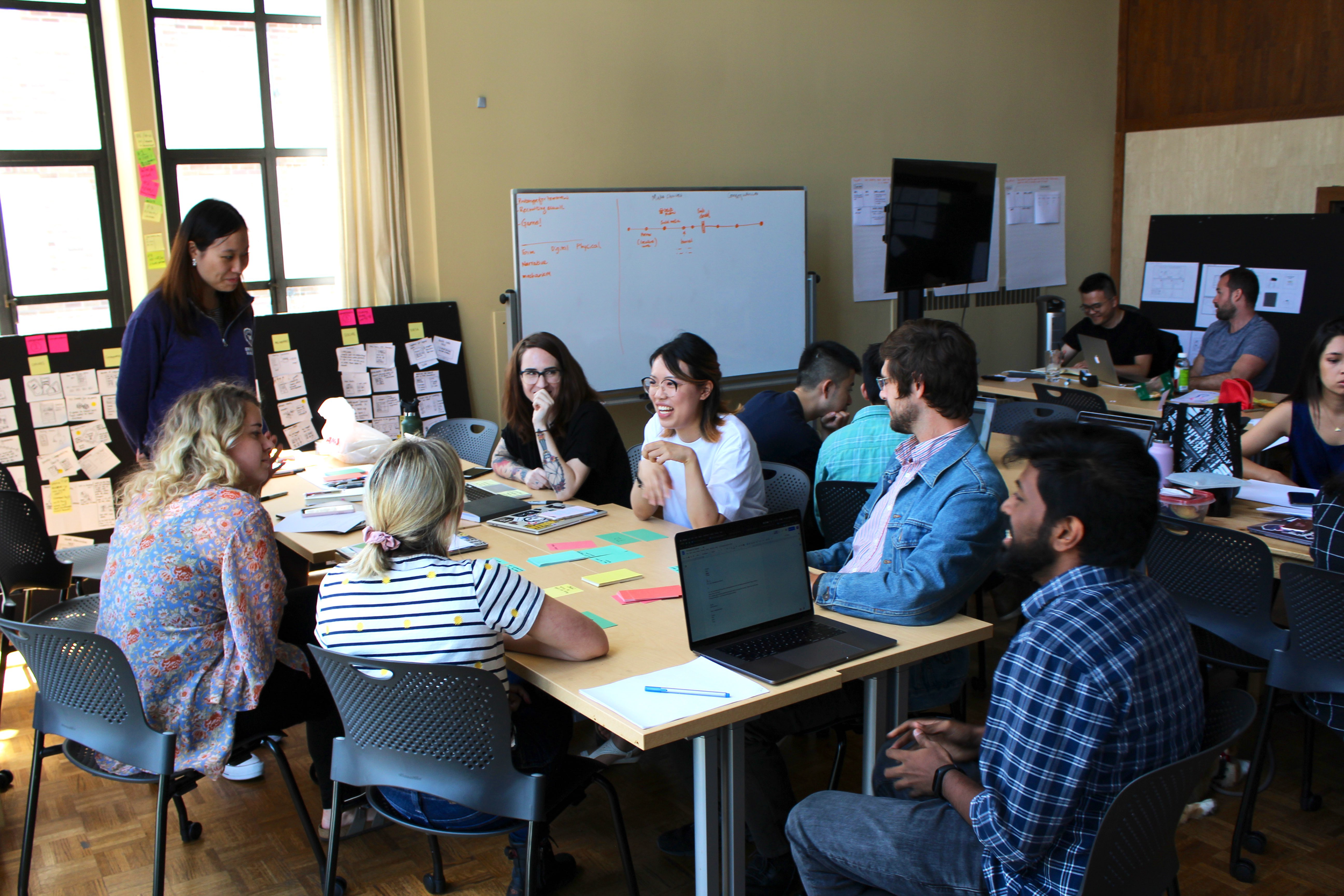
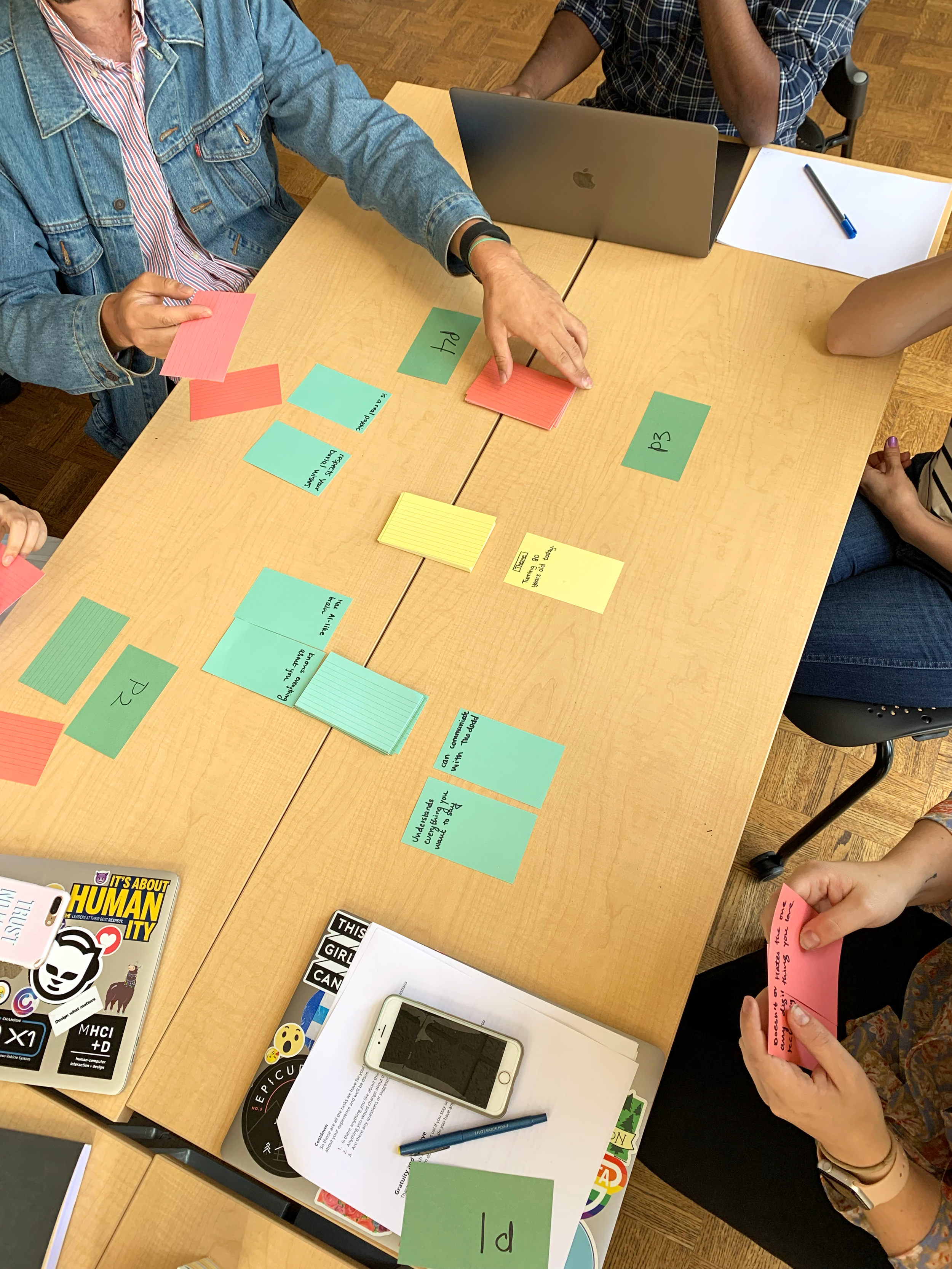
Death x Tech functions as a conversational tool that helps people externalize their values, wishes, and expectations for end of life while reflecting on the physical and digital artifacts they want to pass on. Playtests and research validation show that hypothetical, near‑future scenarios are a gentle but powerful way to unlock real attitudes, emotional readiness, and planning behavior around death. The final game occupies a unique position in a fragmented ecosystem: it bridges death‑positive culture, thanatosensitive HCI, and shifting burial practices, offering families a repeatable way to build shared language and agency around death, legacy, and digital afterlife.
INVITING DEATH IN TO LIVE MORE HONESTLY
Research at Scale
FOUNDATION & STRATEGY
Methods & Strategy
Interviewed 6 experts from the death care industry and HCI community, and attended a Death Cafe in Seattle.
Conducted 12 semi‑structured interviews with participants aged 18–55 about their perception of death, end‑of‑life planning, digital presence, and legacy
Completed a competitive analysis of 20+ products and services across death awareness, death planning, digital assets, and organizations.
From this work, we identified key challenges:
Interviewed 6 experts from the death care industry, the creator or ‘Death over Dinner’, grief counselors, a memorial designer, professors across the death research community from various institutions, attended a Death Cafe, and Death Dinner in Seattle, WA.
Conducted 12 semi‑structured interviews with participants aged 25–45 about their perception of death, end‑of‑life planning, digital presence, and legacy
Completed a competitive analysis of 20+ products and services across death awareness, death planning, digital assets, and organizations.
“How we want to die is the most important and most avoided conversation in America. Death Over Dinner flips that silence into dialogue, connection, and agency.”
The culture has already shifted: more cremation, more green options, more DIY rituals, more digital memorials. What hasn’t shifted is how we start the conversation at the kitchen table. A simple, well‑designed game is a surprisingly powerful way to move families from vague anxiety to shared agency.
We’ve built entire platforms to archive our photos, messages, and work, but almost no habits for talking about what should happen to them when we’re gone. A tool that turns ‘digital afterlife’ into a living‑room conversation, before there’s a crisis, might be one of the most pragmatic technologies we can offer.
“How we die used to be dictated by tradition and industry. Now families are quietly reinventing funerals, burial, and legacy, but they’re doing it without a shared language. A game lets people practice that conversation while they’re still alive is not a novelty, it’s infrastructure for the next era of death care.”
"We talk about data privacy like it's urgent, but after death? It's a forgotten frontier, unregulated, unclaimed, rewriting our stories without our permission."
Several core insights from the research directly informed the content and structure of Death x Tech.
Key insights that shaped the game
People care about death, but almost no one plans for it
Across decades of work on advance care planning, only about one in three U.S. adults has completed any kind of advance directive, despite consistent evidence that directives improve end‑of‑life outcomes and reduce burden on families. Even among those with concerns about cost, comfort, or dignity at the end of life, completion rates remain low and largely stagnant. A game that lowers the barrier to starting these conversations meets a clearly documented gap between concern and action.
Playful formats engage people, but most existing products stop short of real death awareness
Competitive analyses of death‑related apps and services show a split: games and playful apps are great at engagement and retention, but often drift away from actual death awareness, while planning platforms are information‑dense, checklist‑heavy, and emotionally exhausting. Research in thanatosensitive HCI argues that technology should integrate mortality thoughtfully into design, rather than ignoring or trivializing it. A game explicitly designed to balance play and seriousness—using prompts grounded in values, relationships, and legacy—responds directly to this gap in the current product landscape.
Few individuals realize that their digital identity is a dynamic representation of interactions with close connections, and they are often unaware of its emotional impact after death.
Studies on digital legacy show that people assume their photos, messages, and creative output will “be there” for loved ones, but very few actively back up, organize, or label what they want preserved. Research on “digital afterlife” and platform ephemerality highlights how fragile these archives actually are subject to policy changes, account deactivation, and what some scholars call the “death glitch,” where grieving people are forced to navigate opaque systems at their most vulnerable.
A game that prompts players to name what they’d want saved, shared, or deleted starts curatorial work long before families are stuck guessing passwords.
We’re leaving massive digital lives behind and not telling anyone what to do with them
People are generating enormous volumes of digital artifacts—social media, cloud photos, messages—but almost no one is making explicit plans for this “second self.” In the Digital Death Survey, more than 90% of respondents had not completed any social media or digital will, even though most felt comfortable talking about their own death and many had shared funeral wishes verbally. A conversational format that surfaces digital legacy (accounts, archives, creative work) before a crisis aligns with current calls to integrate digital legacy into mainstream advance care planning and bereavement practice.
Death care and burial practices are shifting fast, but everyday conversations haven’t caught up
Contemporary death research documents a rapid move away from a single “default” burial model toward cremation, green burial, recomposition, and other alternative practices. At the same time, movements like “death positive,” Death Cafes, and Death Over Dinner show that when people are given structured but open prompts, they are willing—even eager—to explore new rituals and values around death. A lightweight, repeatable game format gives people a way to process these cultural shifts in their own living rooms, not just in specialized events or clinical settings.
Conversation with close connections is the intervention that matters most—and the one people avoid
Your own primary research echoes broader literature: conversations with close connections reduce emotional and financial stress, clarify wishes, and improve alignment between what people want and what actually happens after they die. Yet both your interviews and external surveys show that these discussions are “rarely initiated” because of taboo, uncertainty, and lack of a natural entry point. Designing a simple, social object—a game—that normalizes and structures these discussions turns a known behavioral bottleneck into something people can literally put on the table.
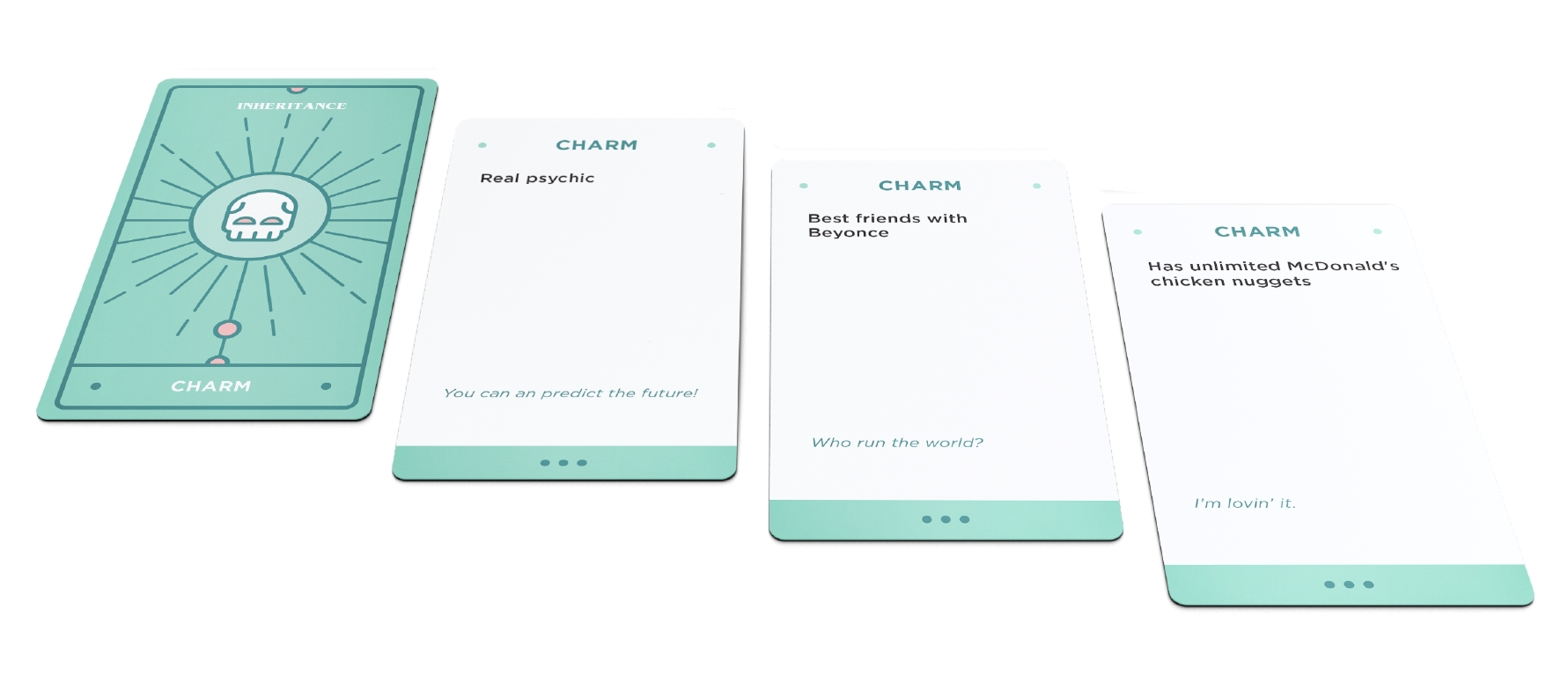
Design for death should be clear, human, and stigma-free, removing bureaucracy, normalizing conversation, and putting people before policies.
These principles were shaped by recurring patterns identified in research on death, digital systems, and user behavior. Interviews, competitive analyses, and cultural studies revealed four consistent themes.
APPROACH
Normalize Death
Strengthen human interconnection
Approach death as part of life, not only as a medical or legal problem.
Accommodate personal preferences
Allow flexibility in how people participate, what they share, and how far they go.
Illuminate consequences
Gently reveal how decisions—or the absence of decisions affect those who remain.
Focus on close connections and shared stories rather than individual tasks.